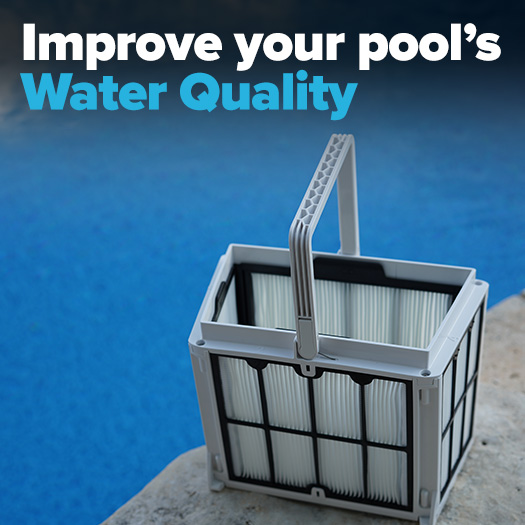
A robot is not a chemical dispenser, but a clean pool is a low-demand pool — and that is where the savings come from.
How Cleaning Reduces Chemical Demand
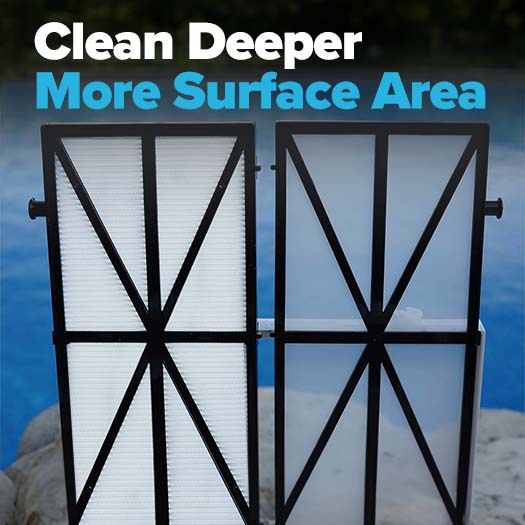
Chlorine and sanitizers get consumed fighting organic contaminants: algae, biofilm, pollen, sweat, and fine debris. A robot scrubs surfaces and filters fine particles out of the water, physically removing much of that load. With less for your sanitizer to fight, it works more efficiently and you typically use less chlorine to hold the same level. Fine filtration matters most here — NanoFilters pull out the microscopic organics that drive demand.
Better Circulation and Coverage
By constantly moving water and disrupting stagnant spots, a robot also helps chemicals distribute more evenly, reducing dead zones where algae takes hold. That is part of why robots are so effective against algae.
What It Won't Do
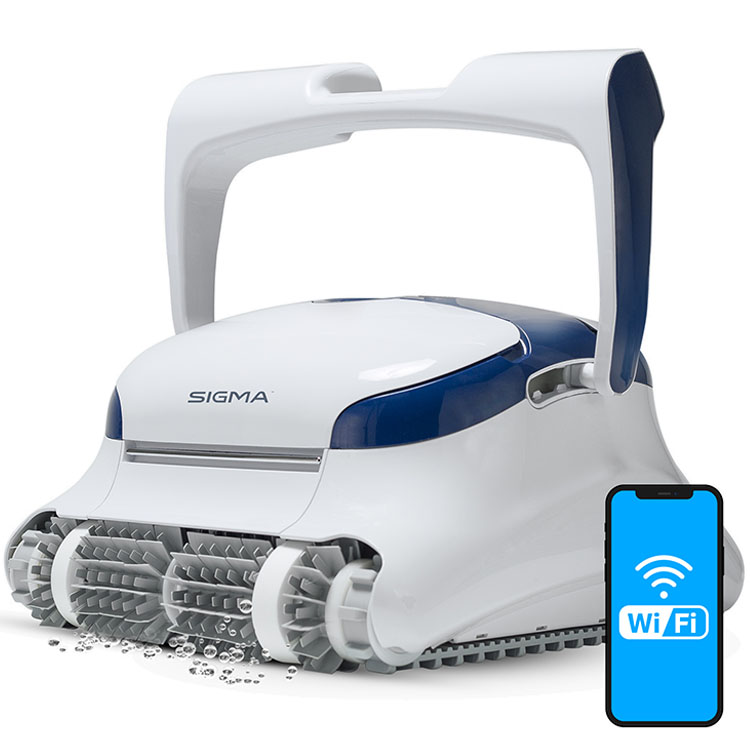
A robot will not balance pH, alkalinity, or calcium, and it will not dose chlorine — you still test and manage chemistry, as noted in can a pool robot replace pool service. But paired with good chemistry, a strong scrubber like the Dolphin Sigma with NanoFilters keeps demand low and water clear. See our best robotic pool cleaners picks.