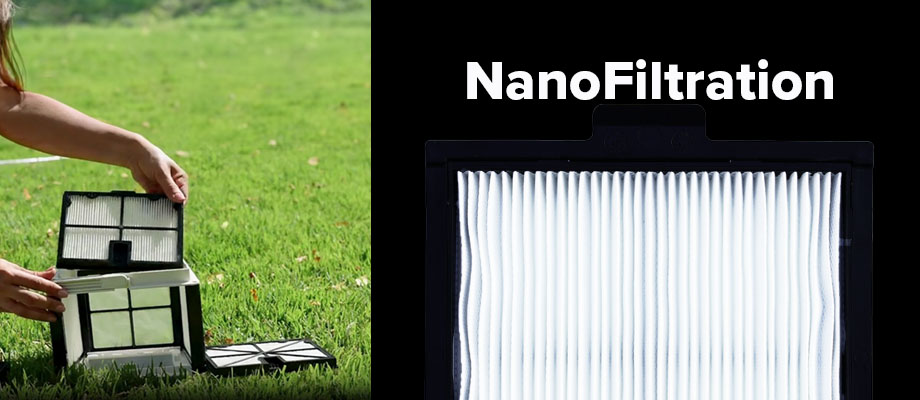
NanoFilters are one of the most worthwhile upgrades you can make to a modern Dolphin robot — but whether you need them depends on what is in your pool.
What NanoFilters Do
NanoFilters replace standard mesh cartridges with deeply pleated microfiber panels that offer far more surface area. That lets the robot trap fine particles — silt, pollen, algae, pet dander, and dust — that standard filters simply recirculate back into the water. In our testing, they delivered a noticeably clearer, deeper clean while still handling leaves and larger debris without a problem.
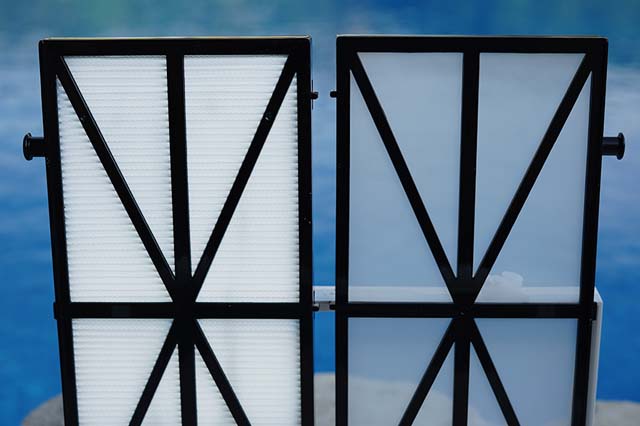
Who Really Needs Them
Consider NanoFilters essential if you deal with:
- Cloudy water or fine silt and dust settling on the floor
- Algae or frequent blooms — see do pool robots pick up algae
- Pollen season or lots of surrounding trees
If your pool only ever collects large leaves and twigs, standard media can keep up, though most owners still appreciate the extra capture.
Getting NanoFilters
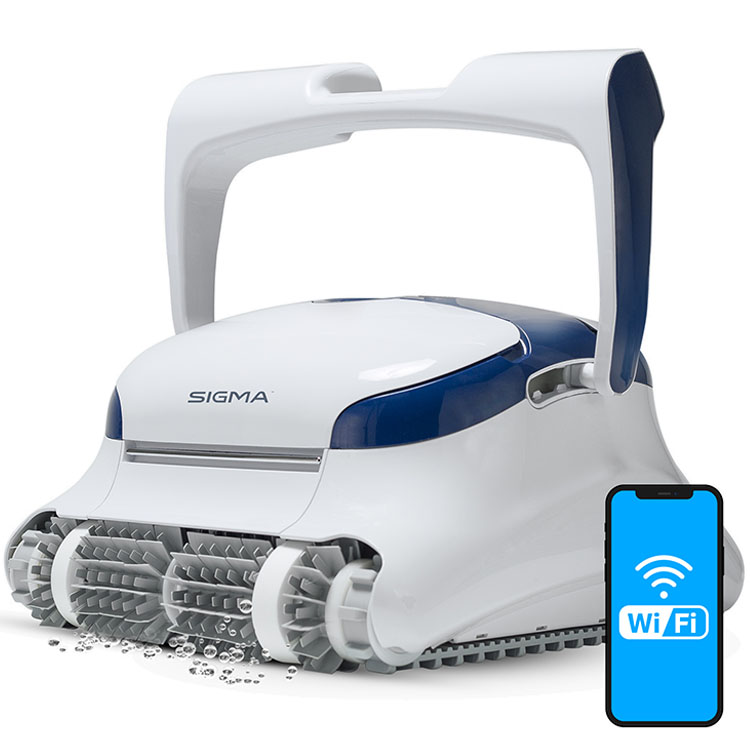
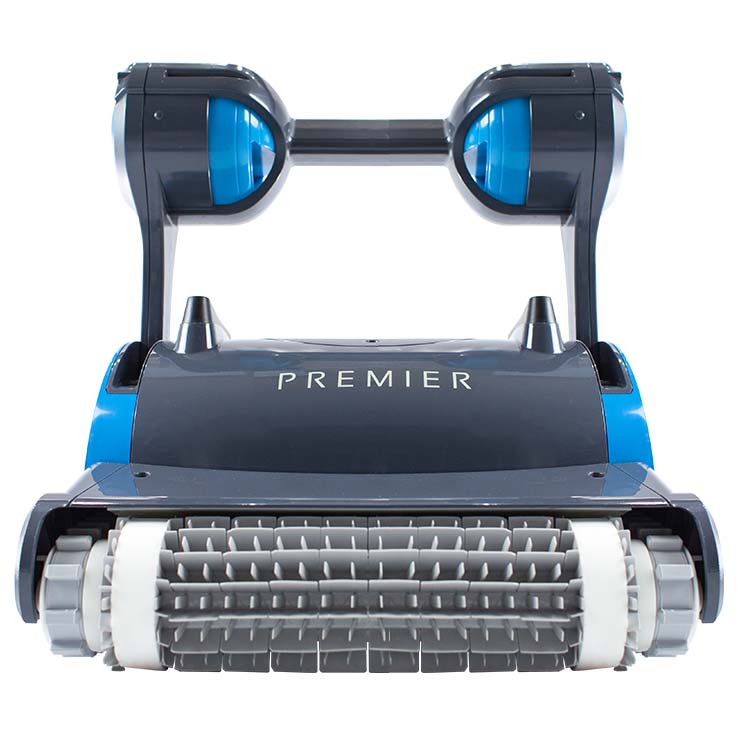
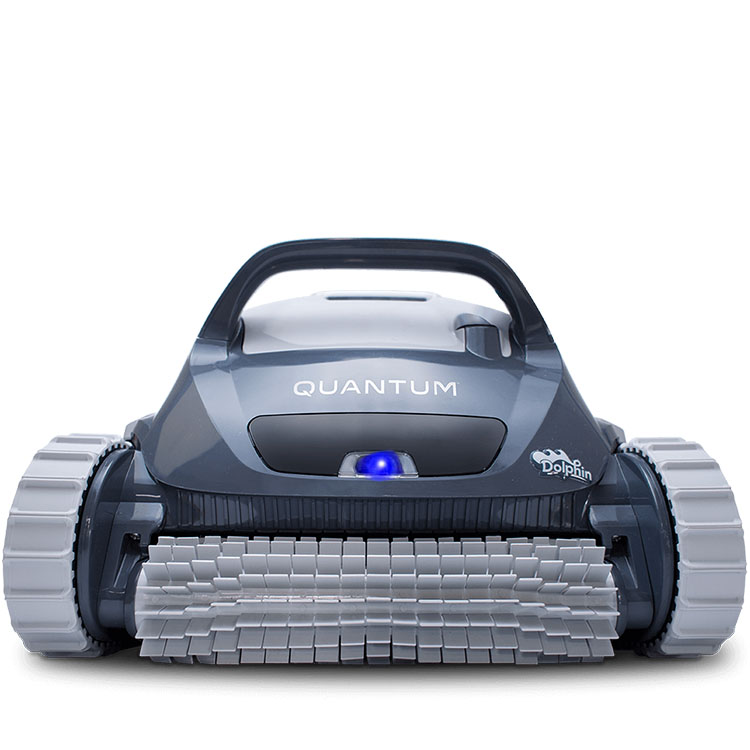
Every Dolphin ProLine model — including the Dolphin Sigma, Premier, and Quantum — includes or supports NanoFilters. If your robot supports them, it is an easy, high-impact upgrade. Find compatible NanoFilters on our parts page, and see what filters to use in your pool robot to match media to your debris.