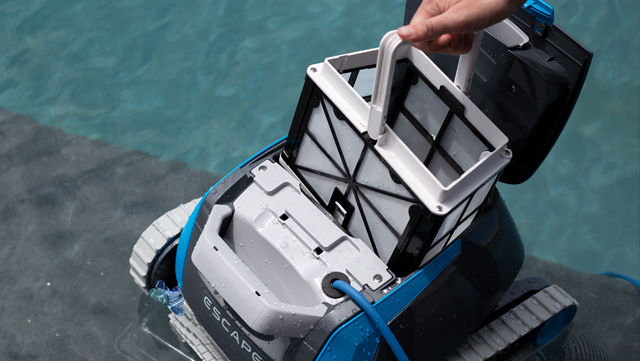
Suction is the heart of a robotic pool cleaner. When it fades, cleaning quality drops fast and the robot can even feel sluggish and slow — but the fixes are usually quick.
Clogged Filter
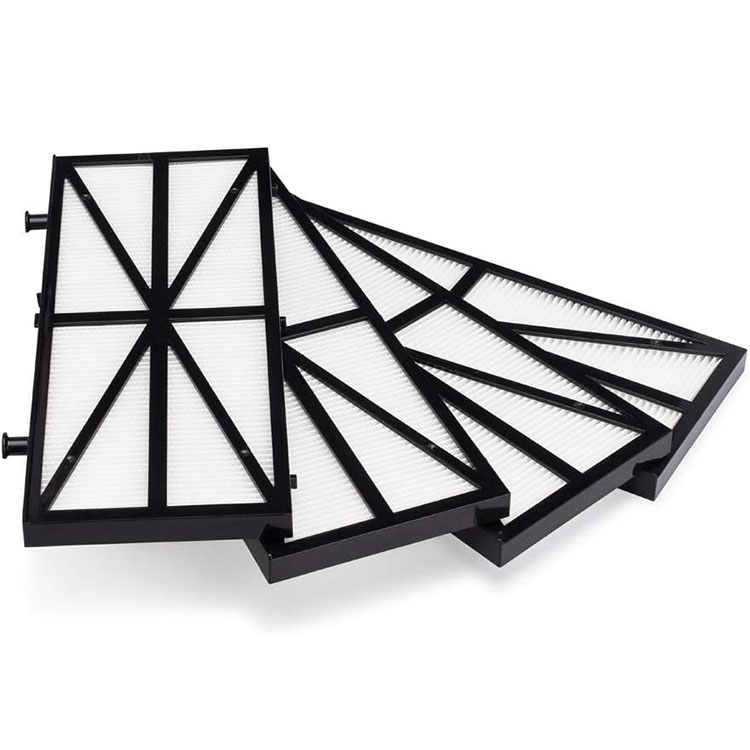
A filter caked with debris chokes off airflow and suction. Rinse it after every cycle and deep-clean it periodically. If fine debris clogs your filter quickly, switch to NanoFilters: their high surface area keeps flow strong while trapping more. Our step-by-step guide covers how to clean pool robot filters.
Trapped Air
Air in the impeller housing is a top cause of sudden suction loss. Lower the robot into the pool on its side and tilt it until all the bubbles escape before each run.
Blocked or Worn Impeller
The impeller is the pump that creates suction. Hair, twigs, or leaves wrapped around it — or a cracked, worn impeller — will sap performance. Open the impeller cover, clear any debris, and replace the impeller if it is damaged. Parts are available on our parts page.
Age and Motor Wear
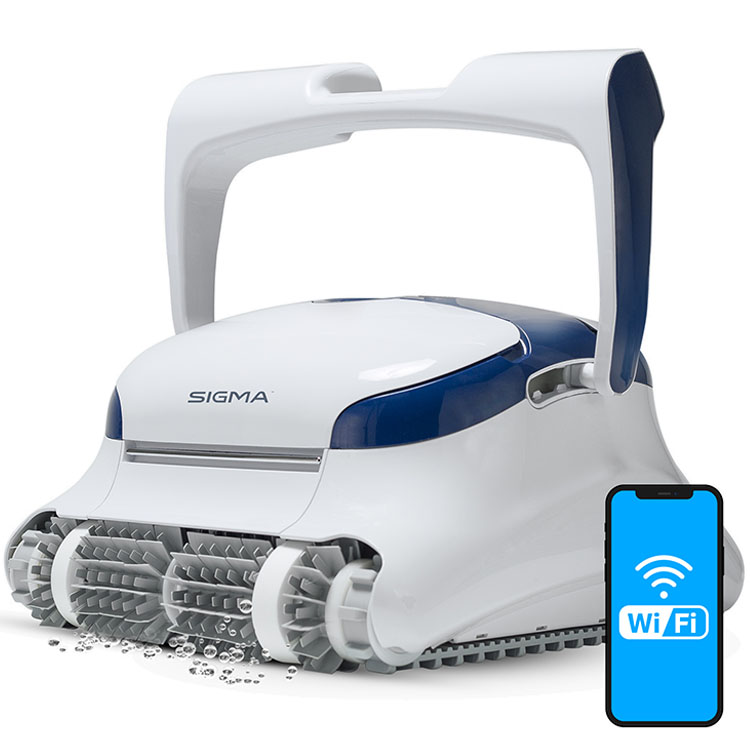
Suction that never recovers despite clean filters and a clear impeller can indicate a tiring motor, common on older or heavily used units. If your robot is past its prime, our best robotic pool cleaners guide highlights powerful corded models like the Dolphin Sigma that hold strong suction for years.